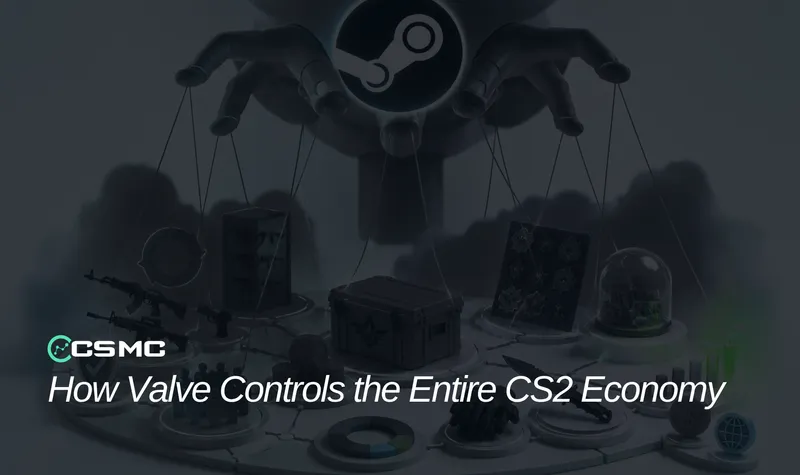
The Counter-Strike 2 skin economy isn't a free market. It may look like one on the surface millions of players trading items, prices moving every minute, and marketplaces competing for volume but behind the scenes, one company controls almost every major economic variable but that company is Valve. Whether you're a collector, trader, investor, or simply someone opening cases for fun, understanding how Valve shapes the market is one of the biggest advantages you can have. Let's look at how.
Every Item Exists Because Valve Allows It
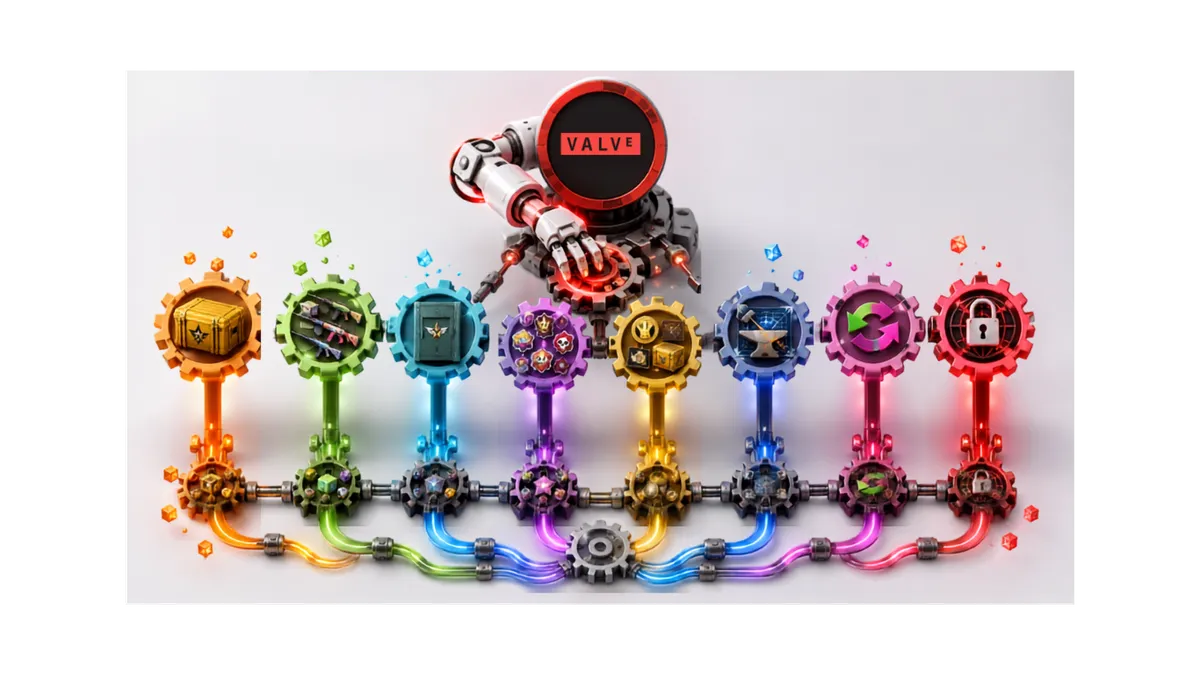
Unlike traditional financial markets, new assets don't appear naturally. Every knife, sticker, case, charm, souvenir, or collection skin enters the economy only when Valve decides to release it. Likewise, supply stops growing only when Valve removes the source.
This means Valve controls:
Case drops
Collection availability
Armory rotations
Sticker sales
Souvenir systems
Crafting mechanics
Trade-up outcomes
Market restrictions
No other participant has that level of influence.
Armory Rotations Instantly Change Supply
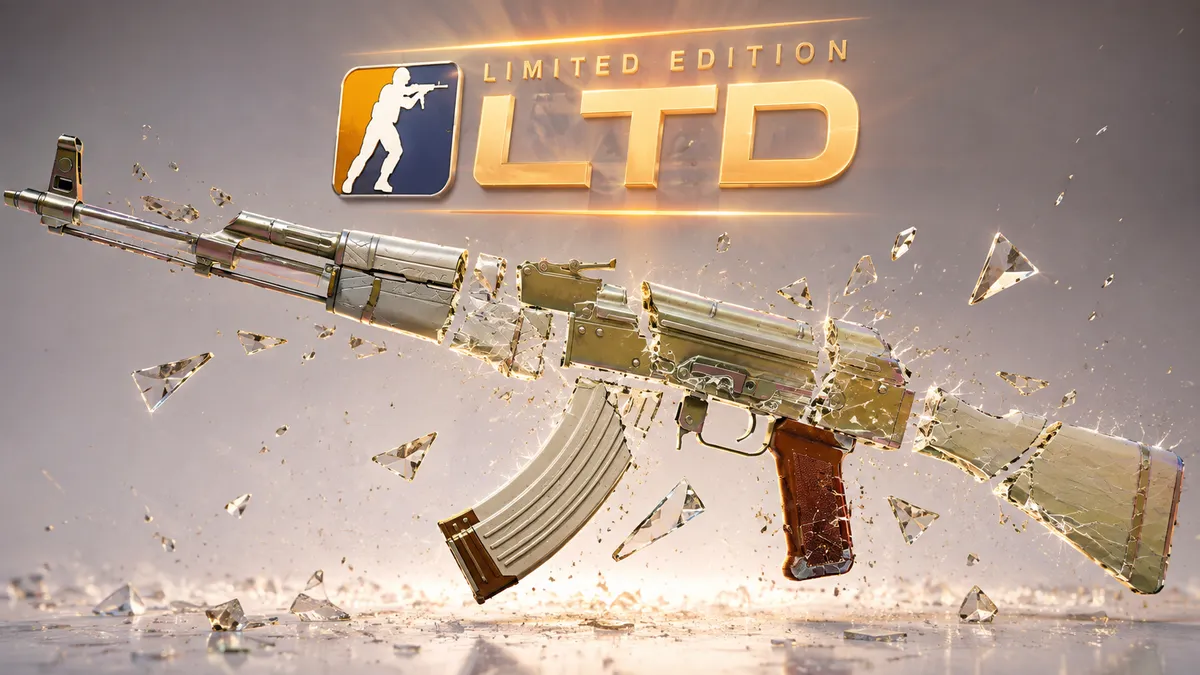
The Armory changed everything. Instead of collections staying available forever, Valve can simply rotate them out.
The moment a collection disappears:
no new skins enter the game;
supply becomes permanently fixed;
every future trade happens between players.
We've already seen how older Armory collections began appreciating after their removal as supply stopped increasing while demand remained. Scarcity is one of the strongest drivers of long-term price growth.
Sticker Sales Can Create or Destroy Billions
For years, every Major followed the same formula:
Tournament ends.
Valve launches a 75% sticker sale.
Millions of capsules enter circulation.
Prices collapse.
Then came Cologne 2026. Valve completely changed the system. Instead of traditional capsules, stickers were sold individually through the in-game store with fixed pricing. That single decision immediately changed investor expectations and completely altered sticker supply dynamics. One update. An entire market repriced.
Small Gameplay Updates Move Huge Amounts of Money
Sometimes Valve doesn't even touch skins directly. A simple gameplay feature can reshape demand.
Examples include:
Charm stickers
New souvenir crafting
Knife and glove trade-up mechanics
Float calculation changes
New collections
Weapon balance patches
Each update changes which items players want to own. Demand moves. Prices follow.
Farming Bans Reduce Future Supply
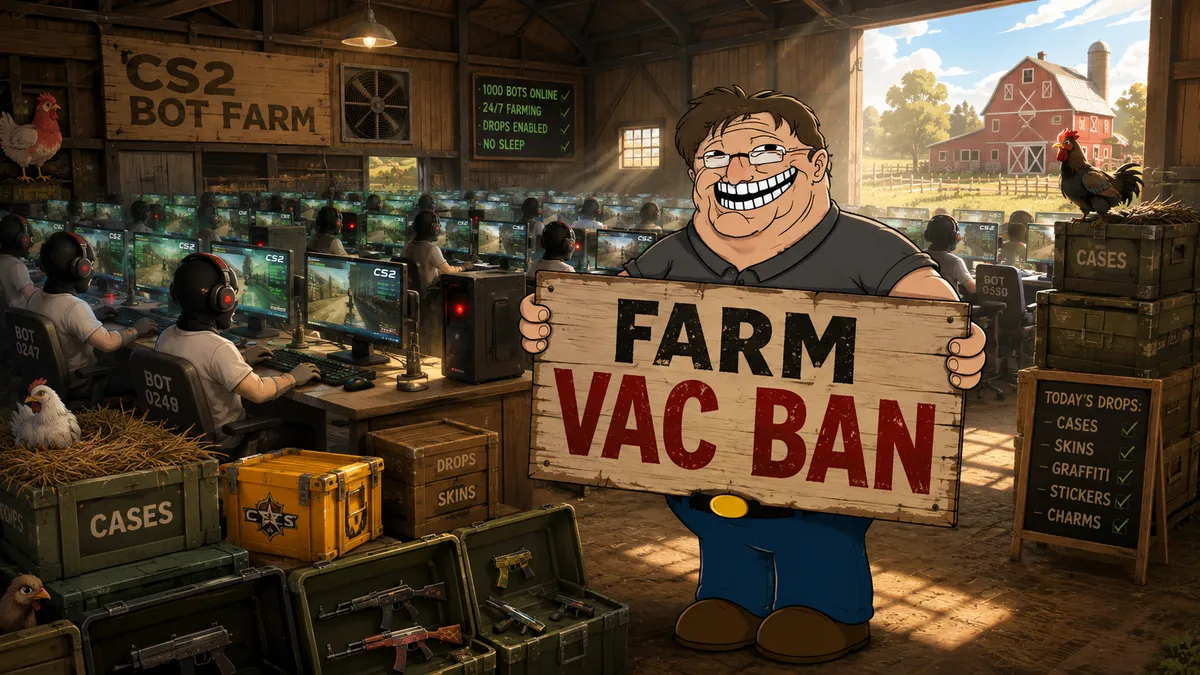
Every ban wave matters. Thousands of farming accounts disappear. Fewer accounts farming means:
Fewer weekly drops;
Fewer Armory rewards;
Lower long-term supply.
The effect isn't always visible overnight. But over months and years, reduced production can become an important factor for certain items.
Valve Also Controls Liquidity
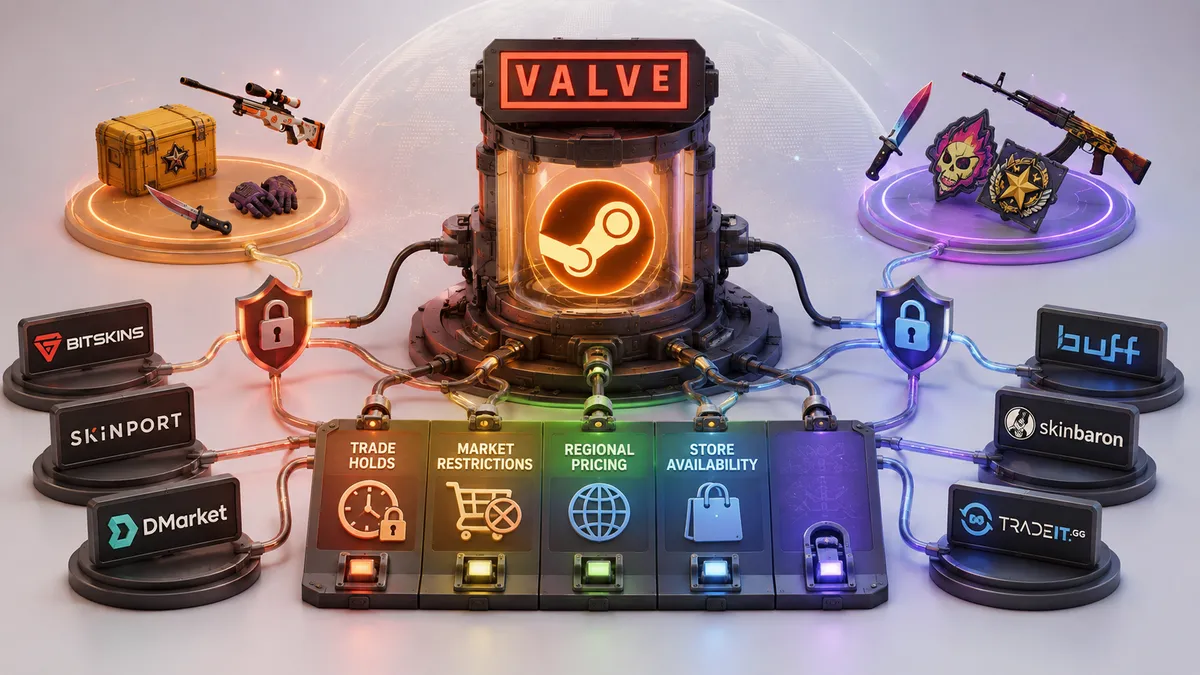
Steam Market rules influence the entire economy.
Trade holds.
Market restrictions.
Regional pricing.
Store availability.
Every marketplace ultimately depends on Valve's infrastructure. Even third-party markets can't escape those rules.
The Market Doesn't Need Bad News to Fall
One interesting fact about the CS2 economy:
Prices often move purely because players expect Valve to do something.
For example:
rumors about sticker sales;
speculation around Armory rotations;
expected case removals;
possible operation releases.
Sometimes nothing actually happens but expectations alone are enough to move millions of dollars across the market.
Why Traders Watch Valve More Than Charts

Professional traders don't only monitor prices. They monitor Valve. Developer updates often matter more than technical analysis.
Questions like these become critical:
Is a collection about to leave the Armory?
Will stickers receive a discount?
Is a new operation coming?
Could a case leave the active drop pool?
Will crafting mechanics change again?
Getting those answers right often matters more than predicting short-term price action.
Why Understanding Valve Matters
The CS2 economy may be worth billions of dollars, but it's still a centrally controlled market. Valve decides when assets are created. Valve decides when supply ends. Valve decides which mechanics change demand. Players buy. Players sell. But Valve writes the rules. Understanding those rules is one of the biggest competitive advantages any trader or investor can have.