

Bear68%of items down
CS2 · Index
$4,904,996-1.55% (30d)24H-1.1%7D-5.2%30D-1.6%90D+1.8%1Y-48.9%

All category indexes
Each category trades like an index — chart, breadth, and click-through to drill in.

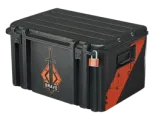
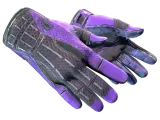
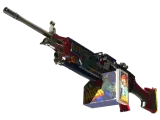
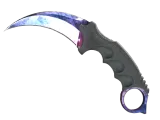

Question hub
A CS2 index tracks the combined value of every item in a single weapon or item category — knives, gloves, agents, rifles, pistols, SMGs, heavy weapons, cases, and stickers. It works like a stock-market index: each item contributes to the total based on its cheapest cross-market price, and the line on the chart shows how the whole category trades over time. CSMarketCap publishes nine CS2 category indexes covering over 23,000 tradeable Counter-Strike 2 items, refreshed every six hours from 20+ skin marketplaces.
For each item in a category we take the cheapest available price across all major CS2 marketplaces — Buff163, CSFloat, Steam Community Market, DMarket, Skinport, Waxpeer, and Youpin. We filter out outlier listings with a 3× cheapest-market guard (any listing priced more than three times above the lowest market is excluded), then sum that one-of-each price across every item in the category. The result is a single USD value that moves up or down with the category's collective price action across the global CS2 economy.
All nine CS2 category indexes refresh every six hours. The underlying price data comes from continuous polling of 20+ skin marketplaces — typically every few minutes per market. The hero chart on each index page shows daily aggregates going back over a year, while the table rows on each /indexes/
Market cap multiplies each item's price by an estimate of how many copies exist in the world, then sums across the entire game — that's what /market-cap shows, currently around $7 billion. Indexes don't multiply by supply: they sum the cheapest price for one of each item in a category. Indexes are a price-action signal; market cap is a size-of-economy signal. For a trader looking to time entries or compare categories, the index is the more actionable measurement. For a market analyst tracking the overall CS2 economy, market cap is the right number.
CSMarketCap monitors 20+ CS2 skin marketplaces in real time, but the index calculation uses only the most reliable cross-market data sources: Buff163, CSFloat, Steam Community Market, DMarket, Skinport, Waxpeer, and Youpin. These are the platforms where price discovery is consistent enough to anchor an index. Outlier listings — anything priced more than three times above the cheapest market — are excluded so a single overpriced offer can't skew the chart. This is the same filter we use on individual item price pages.
Nine categories at launch: Agents (63 items), Knives (3,829 items), Gloves (469 items), Rifles (3,781 items), Pistols (3,359 items), SMGs (2,386 items), Heavy weapons (1,680 items), Cases (44 items), and Stickers (8,956 items). Each category has its own index page with chart history, breadth indicators (how many items are up vs down over 30 days), category-wide biggest gainer and biggest loser cards, and a sortable item table. Music kits, patches, charms, graffities, and other lower-volume categories are not indexed yet.
Indexes give you the macro view that individual item prices can't. If the Knives index is down six percent over 30 days, individual knife prices are probably down too — useful context before buying or selling a specific knife. The breadth indicators tell you whether a move is broad-based (all items down) or concentrated (only a few items tanking the average). The category cards on /indexes let you spot which categories are leading or lagging the overall CS2 market. Combine the index trend with the per-item price history page to make decisions that account for both the category direction and the specific item story.
The index is a category-wide aggregate; your item is one data point inside it. If your item moved differently from the category index, it's usually because of item-specific factors: rarity changes, esports performance affecting sticker prices, new operations adding to skin supply, float value, pattern index, or seasonal demand. Use the individual item page chart to see the per-item story, and the category index to put that story in context. Items at the extreme ends of a category (the cheapest agents, the most expensive knives) often diverge from the median index move.