The CS2 community's favorite piece of investment wisdom is that Major stickers get safer with age. Hold long enough and value takes care of itself. We tested that against price and listing data for every Major sticker capsule from DreamHack 2013 through Cologne 2026. The relationship between age and price barely exists. But there's a much stronger relationship hiding underneath it, and it isn't about value at all. It's about survival.
What we actually found
A third to a full 100% of stickers from CS's earliest Majors are no longer tradeable on tracked markets at all.

DreamHack 2013, the very first Major sticker capsule ever released: 12 stickers, 0 currently listed anywhere. Not one survives on the open market.

DreamHack 2014: 54 stickers, 24 delisted (44%).

Katowice 2014: 52 stickers, 18 delisted (35%).
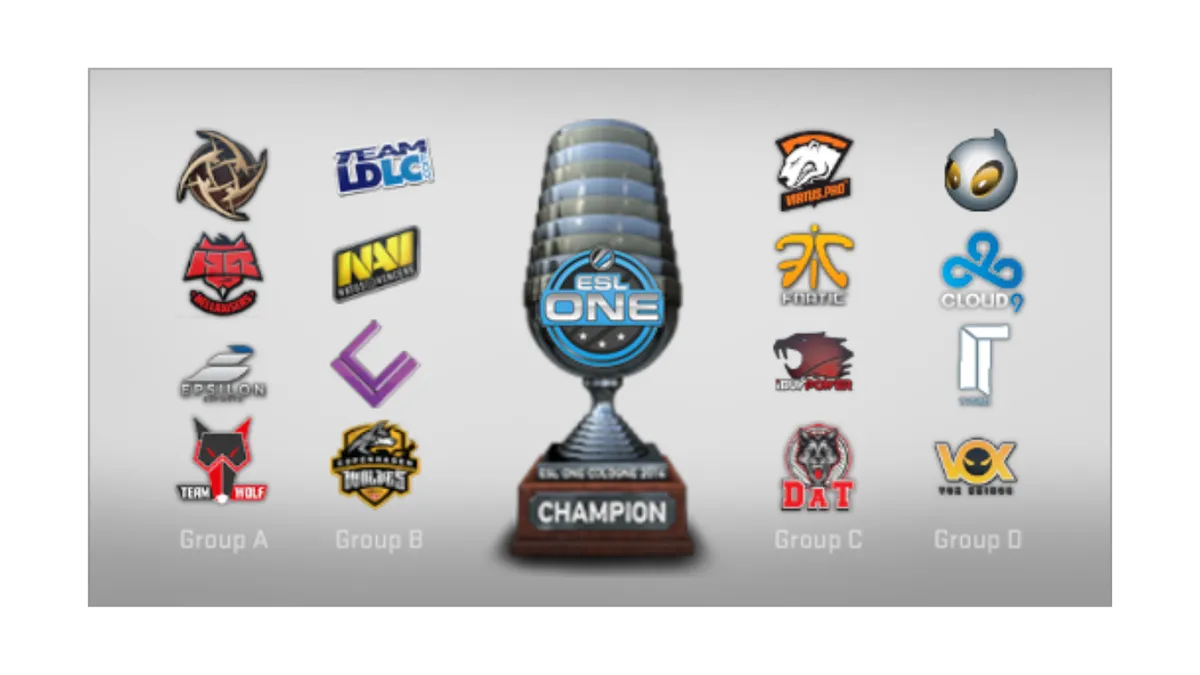
Cologne 2014, Cologne 2015, Cluj-Napoca 2015: right around a third delisted each.
Compare that to every Major from RMR 2020 onward: zero delisting. Every sticker from the last six Majors is still fully tradeable. The correlation between a Major's age and the share of its stickers no longer listed is 0.74, a strong, consistent relationship. The older the capsule, the more of it has simply vanished from the market.
Why this changes the "old stickers hold value" story

Here's the part that matters: when we first looked only at prices for stickers that are still listed, Katowice 2014 looked like a huge outlier. Its surviving stickers retain far more of their peak value than any other Major, and the median listed price for a Katowice 2014 sticker today is a startling $2,650. That's not because Katowice 2014 stickers appreciate with age. It's survivorship bias in its purest form. A third of that capsule has already dropped off the market entirely, presumably the cheap, common, unremarkable third. What's left standing 12 years later is disproportionately the rare, high-value, still-in-demand pieces. The average you get from only the survivors is never going to look like the average of the original capsule. Once you account for that, the "old = valuable" thesis mostly dissolves. Among stickers that are still actually tradeable, age barely predicts how much of their own peak value they retain. The correlation there is close to zero (0.037). What predicts survival isn't time. It's whether the specific sticker was ever scarce or in-demand enough not to get delisted in the first place.
What "delisted" means here, and what it doesn't
To be precise about what we're measuring: "delisted" means a sticker no longer appears as an active listing on the markets we track. We can't fully distinguish between a few different underlying causes: genuinely zero remaining supply, prices too low for markets to bother listing, or items resting untraded in old inventories. We're not claiming these stickers are destroyed or unownable. What we can say confidently is that they are functionally gone from the liquid market, which is the thing that matters if "holding value" is the claim being made.
The bigger picture: a market that's still digesting a bubble
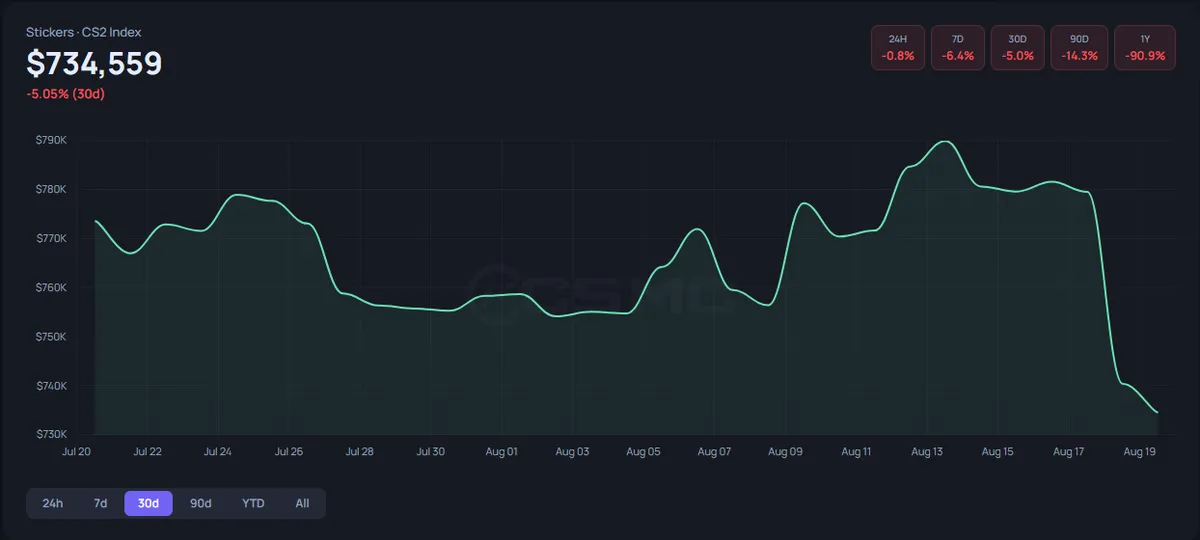
One more thing the data makes hard to ignore: aggregate sticker prices across the whole tracked market went through a violent cycle in the last two years, a roughly 8x run-up from early 2025 into a peak around August 2025, followed by a crash back down near where it started by mid-2026. Every Major's numbers in this piece sit downstream of that cycle, including the "currently listed" prices used above. We're saving the full breakdown of that run and crash for a separate piece, since it deserves its own treatment.
The takeaway
"Major stickers hold their value over time" isn't really true or false. It's the wrong question. The right question is which specific stickers survive at all, and that has much more to do with original scarcity and lasting demand than with a capsule's release year. Most Major stickers, especially from the earliest years of CS:GO, don't get more valuable with age. They just quietly stop being available to buy.